
 Talk to sales
Why Is Customer Guidance Critical in Modern Beauty Retail?
Product category
Author

In beauty retail, product variety continues to expand across skincare, haircare, cosmetics, and fragrance. While this creates more choice for consumers, it also introduces complexity in decision-making. Customers are no longer looking for just products; they expect clear, relevant, and personalized guidance that helps them choose what works for their specific needs.
For beauty retailers, customer guidance is not a value-add; it is a core component of the shopping experience that directly impacts conversion rates, customer satisfaction, and long-term loyalty. Beyond these outcomes, it also plays a critical role across multiple aspects of retail performance. Let’s explore how:
How Can Beauty Retailers Increase Purchase Confidence Through Guidance?
According to the resource, e-commerce channels continue to grow, with online beauty sales expected to expand at a CAGR of 9.3% from 2026 to 2033. As a result, the need for structured customer guidance becomes even more critical in digital environments.
1. Reducing Decision Complexity
Modern beauty retail environments, both online and offline, present customers with multiple options within a single category, often with similar claims, ingredients, and formats. While variety is essential, it can make it difficult for customers to confidently compare products and make a final decision.
Customer guidance addresses this challenge by simplifying the evaluation process. Instead of leaving customers to interpret product differences on their own, guidance systems present structured, comparable information tailored to individual needs. This includes aligning recommendations with specific concerns, explaining how products differ in terms of formulation or benefits, and highlighting the most suitable options.
2. Increasing Purchase Confidence
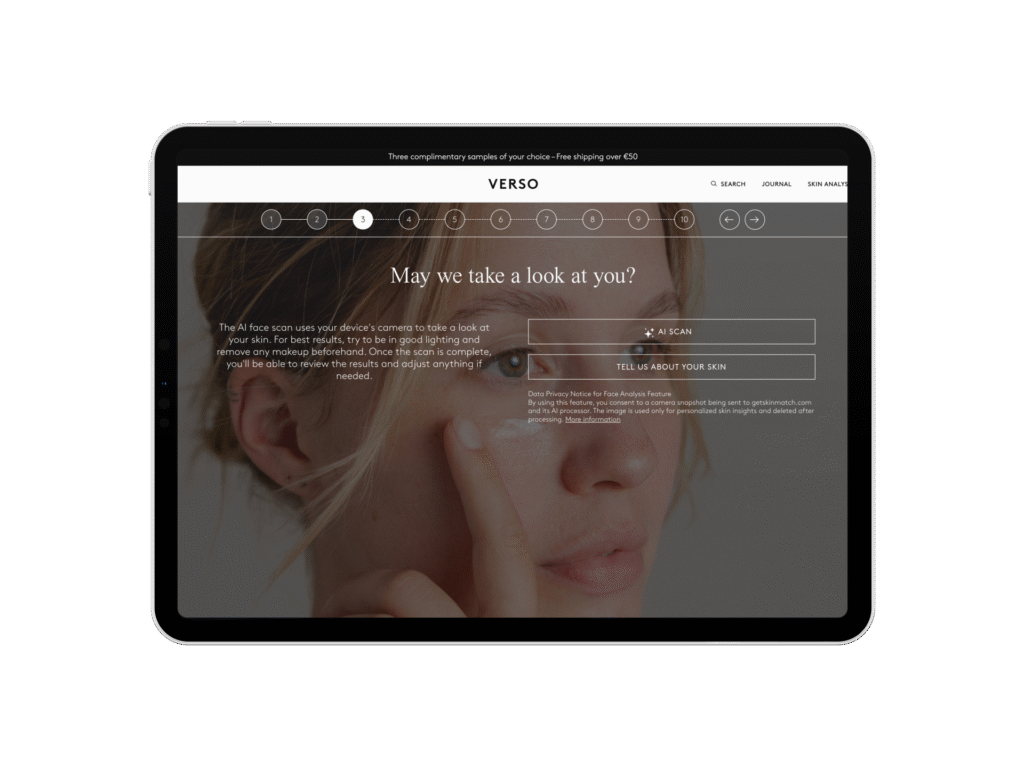
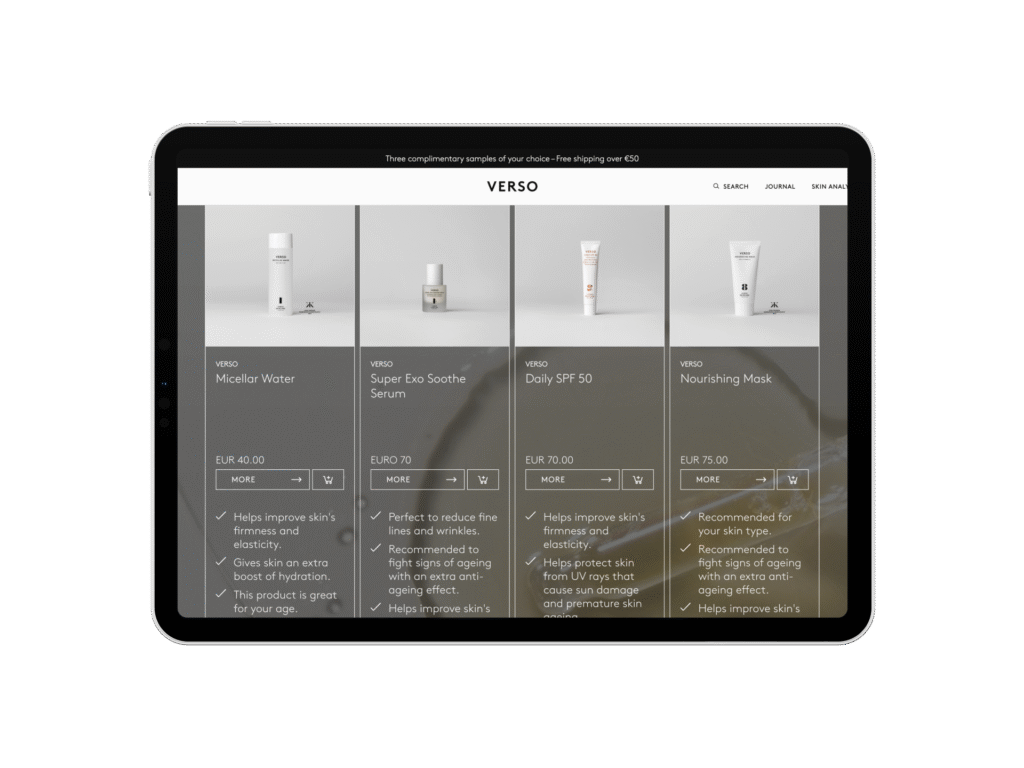
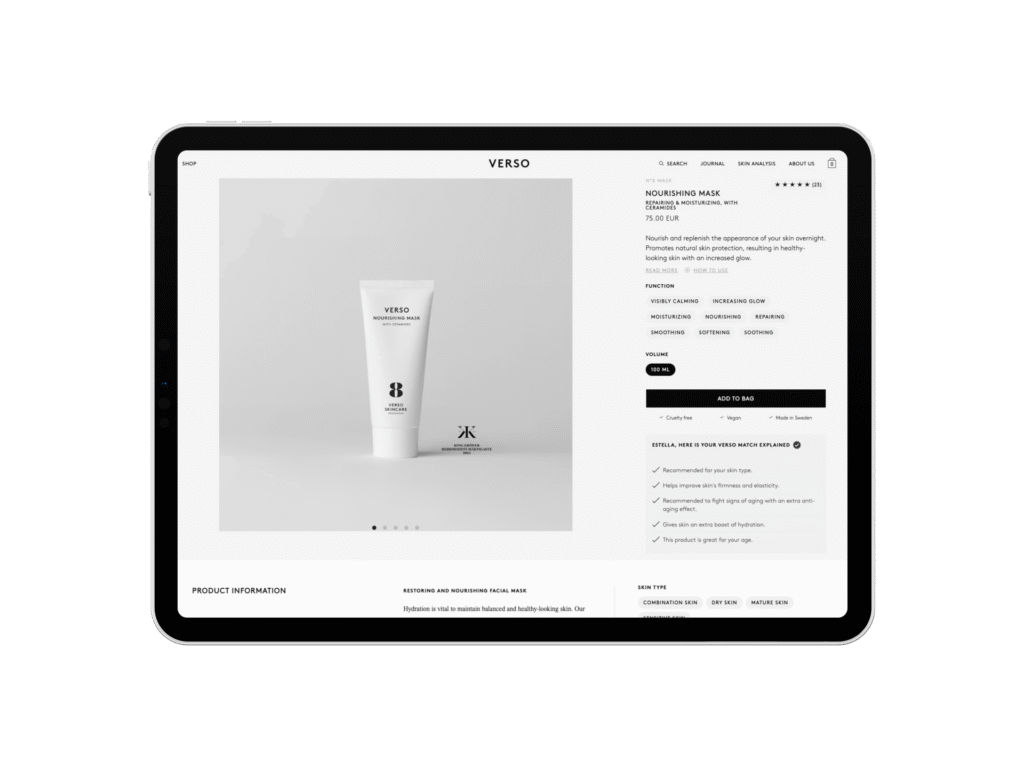
Beauty purchases are often personal and outcome-driven, with customers seeking assurance that the products they choose will be suitable and effective for their specific needs. Customer guidance plays a critical role in building this confidence by offering personalized recommendations based on individual data or consultations.
When customers feel confident in their choices, they are more likely to complete their purchases and significantly less likely to return products.
3. Customers No Longer Feel Lost in Large Catalogues
As beauty retailers continue to expand their product portfolios across skincare, haircare, cosmetics, and fragrance, large catalogues have become the norm. While this breadth of choice allows businesses to cater to diverse customer needs, it can also create confusion for shoppers who are unsure where to begin. Without clear direction, customers may struggle to navigate multiple brands, formulations, and product claims, leading to hesitation or drop-off.
Customer guidance helps structure this experience by making large catalogues more accessible and easier to navigate.
Pro Tip
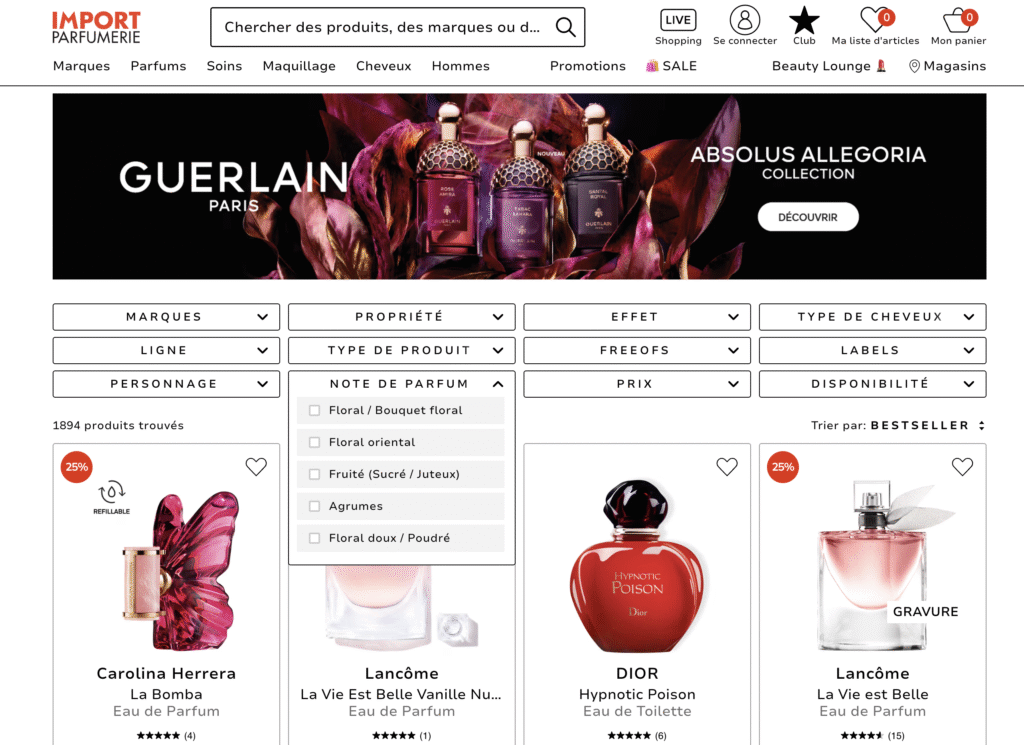
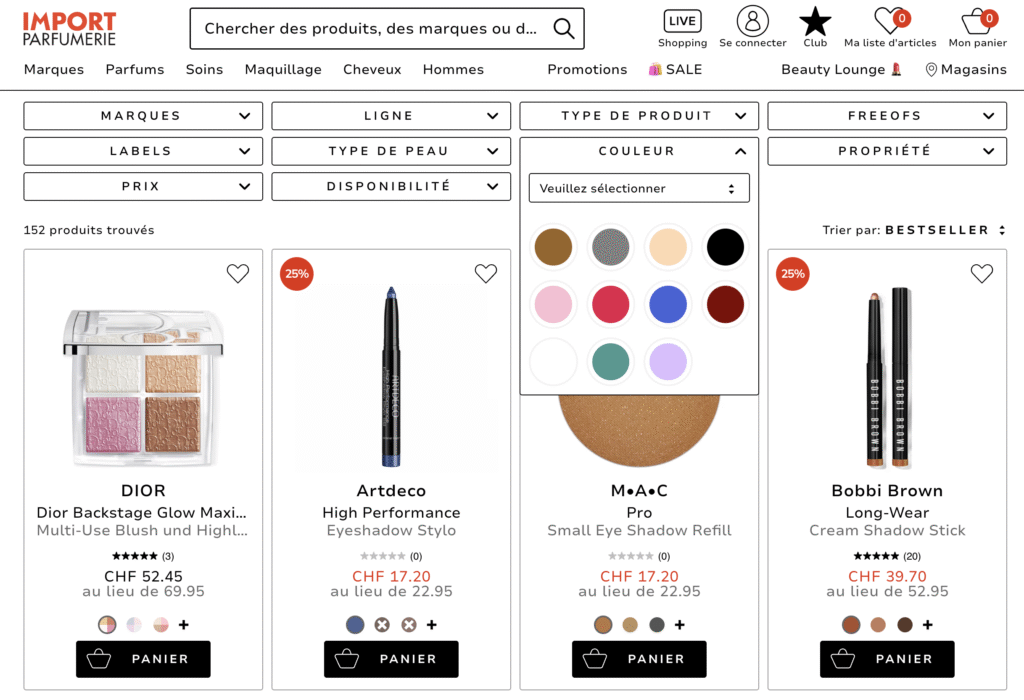
At Inference Beauty, this is addressed through a granular filtering tool that improves product findability at scale. Instead of relying on basic filters, retailers can enable customers to refine their search using highly specific attributes such as skin type, tone, concerns, ingredient preferences, product texture, and formulation details.
4. Improving Conversion and Reducing Returns
Uncertainty is one of the primary reasons for low conversion rates and high return volumes in beauty retail. When customers are unsure about product suitability, they either do not purchase or return items after trial.
Customer guidance directly addresses this by:
- Matching customers with suitable products from the outset
- Reducing trial-and-error purchases
- Increasing satisfaction with first-time buys
For retailers, this leads to measurable improvements in both revenue and operational efficiency.
Here is the guide on Conversion Rate Optimization for Beauty eCommerce Websites
5. Shoppers Can Trust What They Are Purchasing
Trust plays a critical role in beauty retail, especially as consumers become more aware of ingredients, formulations, and product claims. Today’s shoppers want clarity not only on what a product promises but also on what it contains and whether it aligns with their personal needs and preferences. Customer guidance helps bridge this gap by making product information more transparent, relevant, and easy to understand.
This challenge is clearly reflected in the case of Justmylook, a UK-based beauty retailer, which faced increasing demand from customers for better visibility into product ingredients and claims. With a growing segment of ingredient-conscious shoppers, customers were seeking clear, reliable, and easy-to-understand information before making purchase decisions, particularly around formulation safety, clean beauty standards, and fragrance profiles.
To address this, Justmylook partnered with Inference Beauty to implement structured transparency solutions across its e-commerce experience. This included detailed ingredient explainers that broke down INCI lists by function and origin, clearly defined “free-from” claims such as paraben-free or microplastic-free, and standardized clean beauty indicators like vegan and cruelty-free. In addition, fragrance visualization tools were introduced to help customers better understand scent profiles and set accurate expectations.
As a result, Justmylook significantly improved transparency and customer trust within its platform, decoding over 60,000+ ingredients and structuring more than 1,000+ fragrance notes to support informed decision-making at scale.
When customers have clear visibility into product formulations and understand why a product is recommended, they are more likely to trust their purchase decisions.
6. Enhancing Customer Experience Across Channels
Customers interact with beauty brands across multiple touchpoints, such as websites, mobile apps, and physical stores. Inconsistent guidance across these channels can create friction and reduce trust. This alignment is especially important for retailers aiming to deliver an integrated omnichannel experience.
At Inference Beauty, product finder tools are designed to integrate seamlessly across digital and in-store environments, ensuring a unified experience.
On e-commerce platforms and mobile devices, customers can engage with guided discovery tools to receive personalized recommendations. In physical retail settings, this experience can be extended through interactive quizzes on devices or QR code integrations, allowing customers to scan and access the same guided journey instantly.
Learn How to Craft a Winning Omnichannel Strategy for Your Beauty Retail Business
7. Building Long-Term Customer Relationships
Customer guidance is not limited to a single interaction. When implemented effectively, it supports ongoing engagement and relationship-building.
By consistently delivering relevant recommendations:
- Customers are more likely to return for future purchases
- Retailers can introduce complementary or upgraded products over time
- Trust is established through reliable and helpful interactions
This shifts the focus from transactional sales to long-term customer value.
How can AI-based guidance solve common beauty retailer challenges?
| Retailer Challenge | Without Guidance | Inference Beauty Solution |
| How to help customers find the right product from a large catalogue? | Shoppers drop off or buy the wrong product | Granular filtering & AI product finders narrow choices to what fits each shopper |
| How do customers know which products suit their skin or hair type? | Low purchase confidence, high return rate | Skin, hair, and fragrance finders match customers to suitable products based on their profile |
| What can help reduce wrong shade purchases online? | High return volumes, poor post-purchase satisfaction | Shade Finder cross-references existing shades from other brands for accurate first-time matching |
| How to help customers understand complex ingredient lists? | Loss of trust, abandoned sessions, post-purchase regret | Ingredient Explainer decodes INCI lists in plain language with function, origin, and safety context |
| How can shoppers identify if a product is vegan, clean, or allergen-free? | Customer hesitation and drop-off among ingredient-conscious segments | Structured clean beauty icons and free-from claim tagging across the full catalogue |
| What ensures consistent guidance across all retail touchpoints? | Fragmented experience reduces brand trust | Product finder tools integrate across e-commerce, mobile, social, and in-store touchpoints |
| What insights reveal true customer demand? | Poor ranging decisions, missed revenue opportunities | Analytics dashboard surfaces real-time insights on customer intent, drop-off points, and trending needs |
As beauty retail becomes more complex, customer guidance ensures shoppers can navigate choices with clarity and confidence. It streamlines decision-making, enhances satisfaction, and strengthens long-term customer relationships.


