 Talk to sales
Structuring Beauty: How Ingredient Transparency Powers AI Visibility and Retail Growth
Product category
Author

Beauty discovery is changing fast. Consumers are no longer relying only on search engines, social media, or in-store advisors to decide what to buy. Increasingly, they are turning to AI-powered systems to help them compare products, understand ingredients, and find the right match for their specific needs. ChatGPT, Google AI Overviews, retailer shopping assistants, and conversational recommendation tools are all becoming part of the beauty buying journey.
That shift has major implications for brands and retailers. In an AI-driven environment, visibility is no longer shaped only by paid media, traditional SEO, or brand awareness. It is shaped by the quality and structure of the data behind each product. For beauty in particular, ingredient transparency is becoming one of the strongest signals that influences whether a product is surfaced, recommended, or ignored.
This matters because beauty shoppers are more informed than ever. They want to know what is in a formula, what those ingredients do, whether a product fits their skin or hair needs, and how it compares to alternatives. AI systems are increasingly built to respond to exactly those kinds of questions. That means retailers and brands that provide clear, structured, trustworthy product information are in a much stronger position to win visibility and trust.
For department stores, specialty beauty retailers, and beauty e-commerce players, this is more than a content trend. It is a commercial opportunity tied directly to conversion, average order value, and multi-category basket growth. The more intelligently a beauty catalog is structured, the better it can perform in search, recommendation, filtering, and personalization.
At Inference Beauty, we see ingredient transparency as a growth engine. Structured beauty data helps retailers build better discovery journeys, power smarter recommendations, and become more visible in the AI environments that are increasingly shaping purchase decisions.
Why ingredient transparency matters more in the AI era
AI systems do not interpret beauty products the way a human merchandiser or beauty advisor does. They rely on product attributes, ingredient data, taxonomy, contextual signals, and supporting content to understand what a product is, what it does, and who it is for.
When a shopper asks a question like “What serum is best for redness?” or “Which foundation matches my skin tone and is fragrance-free?”, the AI needs specific inputs to generate a useful answer. If the product catalog includes standardized ingredient information, clear benefit mapping, and well-structured product detail pages, the system can connect shopper intent to the most relevant products. If the data is incomplete, inconsistent, or vague, those products become harder to interpret and far less likely to appear.
This is where beauty retail has a significant opportunity. Ingredient data is not just technical information sitting in the background. It is one of the strongest ways to connect formulation to consumer need. In an AI context, that connection becomes highly valuable because it makes products easier to recommend across a wide range of use cases, preferences, and concerns.
The result is a new model of beauty visibility, one where structured data often matters more than broad marketing language.
From brand storytelling to machine-readable product intelligence
Beauty has always relied on storytelling. Aspiration, emotion, brand world, and identity still matter. But AI discovery introduces a new requirement: products must also be described in a way machines can understand and use.
That means a vague phrase like “radiance-boosting treatment” is much less useful than a product description that clearly explains what is inside the formula, what the hero ingredients do, which concerns it addresses, and how it compares to other options. AI systems perform best when product content is specific, structured, and grounded in facts. They are far more likely to surface a product that has well-organized data around benefits, skin type, sensitivities, ingredient roles, scent families, shade logic, or usage context.
For retailers, this is not simply a product copy exercise. It is a data strategy. The retailers that structure their catalogs most effectively will have a major advantage in AI-assisted discovery, because they make it easier for systems to find the right product at the right time for the right person.
That advantage shows up across the entire customer journey. It improves onsite search. It strengthens filters and sorting. It enables more relevant recommendations. It supports regimen building across categories and brands. And it gives AI-driven experiences better material to work with, whether that is on a retailer site, in search results, or inside an external conversational interface.
Why this directly affects retail performance
Ingredient transparency is often discussed as a trust or compliance topic, but in practice it has become much more than that. For beauty retailers, it now has a direct connection to performance.
When shoppers receive recommendations that feel specific to their needs, they are more likely to convert. When product content makes it easier to understand the role of ingredients, compare across brands, and build routines with confidence, basket size tends to grow. And when assortments are structured in a way that supports concern-based or preference-based discovery, retailers create more opportunities for cross-category and cross-brand selling.
This is especially important for established retailers whose growth depends not just on single-product conversion, but on increasing average order value and encouraging broader basket building. A well-structured catalog helps turn a serum purchase into a regimen, a foundation match into adjacent complexion purchases, or a fragrance exploration into discovery across scent families and complementary categories.
The commercial value of transparency lies in making products easier to discover, easier to understand, and easier to trust.
What leading beauty brands already understood
Some of the most influential beauty brands have already shown what happens when transparency becomes central to the customer experience. The Ordinary is one of the clearest examples. Rather than hiding behind abstract brand language, it made ingredient names, percentages, and formulation logic highly visible. That approach made products easier for shoppers to understand and easier for digital systems to categorize and recommend.
Paula’s Choice built authority in a different but equally effective way. By pairing products with ingredient education and evidence-based content, the brand positioned itself not just as a seller of skincare, but as a trusted source of skincare knowledge. That model built long-term brand trust while also creating a rich content environment around ingredients, benefits, and product usage.
The lesson is not that every retailer should copy those brands’ tone or aesthetic. The lesson is that clarity wins. Transparent, structured, educational beauty content does more than support the shopper. It creates a much stronger foundation for discoverability in modern digital environments.
Retailers, in fact, have an even bigger opportunity than individual brands. A retailer can normalize and enrich data across hundreds or thousands of SKUs, creating a more powerful discovery layer across the entire assortment. That is where the real competitive edge begins to emerge.
The retailer opportunity: structure the catalog, strengthen the experience
Many retailers still depend heavily on whatever raw product data brands provide. In beauty, that creates a familiar problem: inconsistent naming, uneven product detail pages, incomplete ingredient information, weak taxonomy, and very limited comparability across brands.
The result is a fragmented catalog that is difficult to search, filter, recommend, and personalize effectively.
But when retailers standardize and enrich beauty data across the assortment, the experience changes dramatically. Product discovery becomes more relevant. AI-powered recommendation becomes more precise. Filtering becomes smarter. Product pages become more informative. The overall shopping journey feels less like browsing and more like guided decision-making.
This is where Inference Beauty is built to deliver value.
Inference Beauty helps retailers transform beauty product data into a performance asset. Our platform combines AI-driven personalization with one of the deepest beauty data foundations in the market, enabling retailers to create richer, more intelligent shopping experiences.
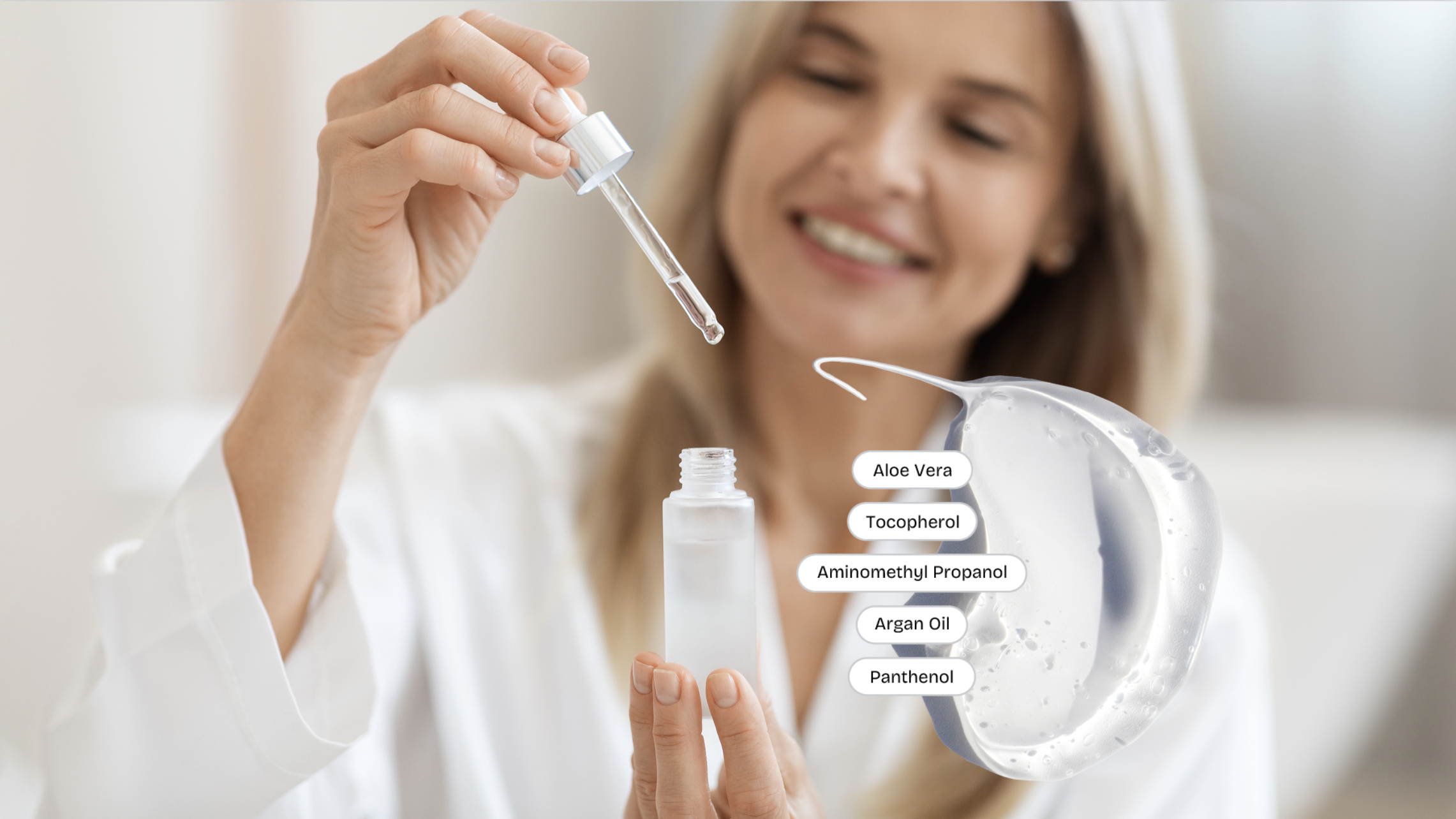
Our ingredient and product intelligence includes more than 140,000 beauty SKUs and 60,000 standardized ingredients, categorized by effect, source, utility, and group. This depth allows retailers to move far beyond basic catalog management and create truly AI-ready discovery experiences.
That foundation powers solutions such as AI Face and Skin Analysis, AI Hair Analysis, Fragrance Finder, cross-brand Foundation Matching, Ingredient Explainer, fragrance note visualization, and personalized PDP experiences. Together, these capabilities help retailers guide shoppers with greater precision while also improving how products are structured, tagged, and surfaced across the site.
Because our proprietary ingredient and fragrance note database supports advanced matching logic, retailers can also serve shoppers with specific sensitivities, allergies, exclusions, or ingredient preferences far more effectively. That level of nuance is increasingly important in beauty, where consumer expectations are moving toward greater transparency and personalization.
What AI-ready beauty content actually looks like
Improving AI visibility does not require turning every product page into a scientific paper. It requires making the catalog more usable, both for the shopper and for the system interpreting it.
That starts with standardized ingredient naming and consistent product taxonomy. It continues with clearer ingredient-to-benefit mapping, more precise claims, and better structure across categories such as skin concerns, hair concerns, finish, fragrance family, coverage, tone, and formulation type.
It also means going beyond brand silos. One of the most valuable things a retailer can do is create cross-brand comparability. That could mean matching foundations by tone across brands, connecting fragrances by olfactive family and note profile, or identifying products with similar functional ingredients for a shopper with specific concerns. When that layer exists, the retailer becomes far more useful to both the customer and the AI systems supporting discovery.
Consumer-facing transparency tools also matter. Ingredient explainers, note visualization, recommendation engines, and guided diagnostic experiences help translate data into confidence. They do not just make the site more informative. They make it more actionable.
This is where structured data stops being a back-end exercise and starts becoming a visible advantage in the customer journey.
SEO and LLM visibility are becoming the same conversation
For beauty retailers, one of the biggest strategic shifts is that SEO and LLM visibility are beginning to converge. Both depend on content that is well-structured, semantically rich, relevant to real consumer questions, and grounded in trustworthy product data.
In other words, the same work that makes a beauty catalog more useful for search engines also makes it more useful for AI-generated answers and recommendation systems. Ingredient intelligence plays an especially important role here because it connects formulation to function in a way that is highly relevant to both search and conversational discovery.
That is why structured beauty data is becoming such a valuable asset. It helps products appear not only when someone types in a search bar, but also when they ask an AI for advice, comparison, or a personalized recommendation.
Retailers that invest in this capability now are building an advantage that extends far beyond SEO in the traditional sense. They are preparing their assortments for the next generation of discovery.
Want to stay in the know?
Follow us on LinkedIn where we post the latest updates on clients, news and solutions.

Why this matters now
Beauty retail is becoming more conversational, more personalized, and more dependent on high-quality product intelligence. Shoppers increasingly expect retailers to help them find products that fit their exact skin concerns, hair needs, scent preferences, sensitivities, and aesthetic goals. They expect guidance, not just inventory.
Retailers that cannot support that level of precision will increasingly struggle to stand out in AI-assisted commerce. Those that can will be in a much stronger position to capture attention, earn trust, and drive higher-value baskets.
The opportunity is particularly strong for multi-brand retail. When shoppers want recommendations across categories and brands, the retailer with the best structured intelligence becomes the most useful destination.
The future of beauty retail belongs to structured intelligence
Ingredient transparency is no longer just a compliance signal or a brand trust signal. It is now a discoverability signal, a personalization signal, and a retail performance signal.
For department stores, specialty beauty retailers, and beauty e-commerce businesses, structuring beauty data is becoming essential to staying visible in the channels where product discovery increasingly happens. Retailers that invest in richer ingredient intelligence, better taxonomy, and stronger personalization capabilities will be better equipped to drive conversion, increase average order value, and support multi-category growth.
Inference Beauty helps retailers turn beauty complexity into commercial advantage. By combining AI-powered personalization with deep beauty ingredient and product intelligence, we enable more relevant discovery journeys, better product matching, and stronger customer experiences across the digital shelf.
In the AI era, the retailers that win will not simply be the ones with the biggest assortment. They will be the ones with the most usable product intelligence.
And that starts with structuring beauty.
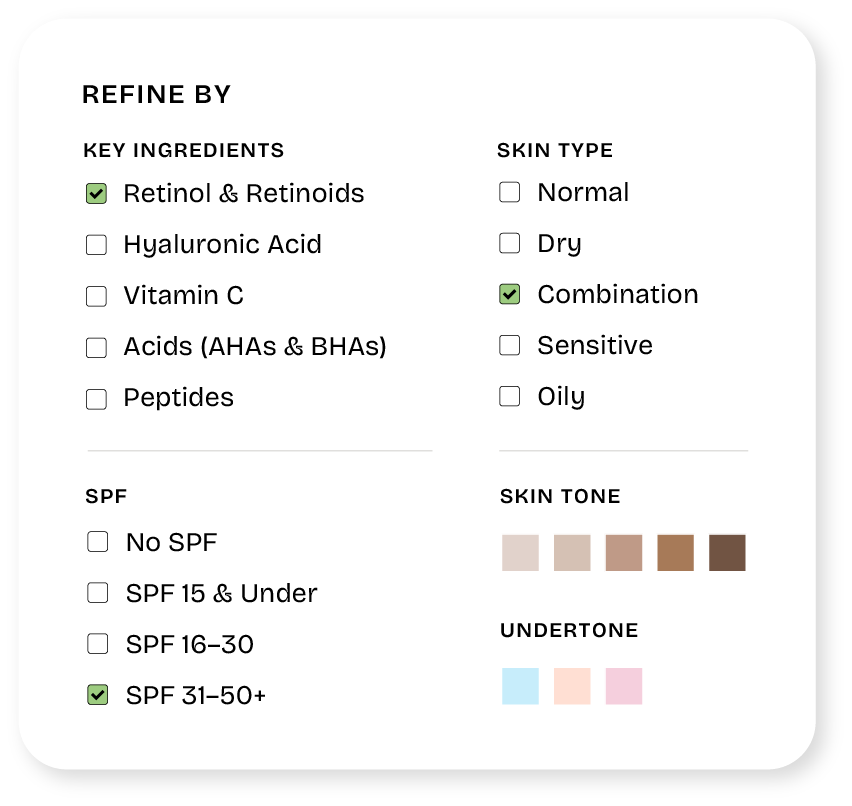
Granular Data
Get the data to create any type of filters customers want.